Rediff On The Net:Ten years of conflict in Kashmir
http://www.rediff.com/news/1999/dec/08blood1.htm
 |  |
|  |  | HOME NEWS SPECIALS BLOOD IN THE SNOW
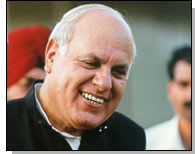  Unfortunately, the same could not be said about his son and political heir. Dr Farooq Abdullah was, at best, seen as an immature politician incapable of administration. But he filled the political void that his father's death left. He had no rival. He still doesn't. The 1983 election saw Dr Abdullah riding a huge sympathy wave. His National Conference, which rejected then prime minister Indira Gandhi's proposal to share seats, swept the valley. The son settled more comfortably into his father's chair. But not for long. Indira Gandhi wasn't the kind who took a snub lying down. She made Dr Abdullah pay for crossing her. A Congress-engineered defection in July 1984 saw Governor Jagmohan, specially appointed for the purpose, dismissing the NC government. In Dr Abdullah's place was his brother-in-law, Ghulam Mohammad Shah. Delhi's coup made Dr Abdullah even more of a hero to the Kashmiris than before. The anti-India feeling they had always harboured started coming to the fore more prominently. Two years later, on March 7, 1986, Shah was shown the door. Dr Abdullah was not re-instated. Instead, President's rule was imposed. In November that year, Dr Abdullah was back in power, aided by a mammoth mistake: a seat-sharing agreement with the same Congress party that he had rejected earlier. 'He signed the accord without honour or pride. He let down the people of Kashmir,' Mirwaiz Maulvi Farooq, the religious head of the majority Kashmiris, then said. Overnight, the Hero became the Villain. The Kashmiris had till then seen Dr Abdullah as his father's son. One of their own. But after the accord, he became 'an Indian.' And that is the worst thing to happen to you in Kashmir. "Kashmiris do not differentiate between India and the central government," explains one Kashmir-watcher. "If something goes wrong in any other state they would blame the Centre. But not in Kashmir. Anything that goes wrong in Kashmir is added to the debit balance of India." The March 1987 election was the most unfair electoral event in Kashmir's history. Despite public support, the Muslim United Front, formed exclusively to counter the National Conference-Congress alliance, lost. One MUF candidate, the Jamaat-e-Islami's Maulvi Mohammad Yusuf Shah, crossed over to Pakistan. Today he is Syed Salahuddin, the supreme commander of the militant Hizbul Mujahideen outfit. Mohammed Yasin Malik, his polling agent, went on to command the Jammu and Kashmir Liberation Front. "The election was rigged during the polling as well as counting," say Kashmiri journalists, "Farooq rigged it not because he was scared of losing; he wanted a comfortable majority in the House on his own so that he could stand up to the Congress." Dr Abdullah got what he wanted all right. But in the bargain, he lost the people of Kashmir. The election disillusioned the Kashmiri, shattered his faith in democracy to such an extent that he turned towards Pakistan. While this political drama was unfolding, violence had already started shattering Kashmir's tranquillity. The first instance of militancy, an attempt to steal rifles from the National Cadets Corps armoury, had occurred in 1968. On February 3, 1984, a misadventure occurred in Birmingham, in the United Kingdom. Militants of the Kashmir Liberation Army held Ravindra Mhatre, an Indian diplomat, hostage. They wanted JKLF founder Maqbool Bhat, who was then jailed in Delhi, released. The drama came to an end when Mhatre's body was found on February 6. The Indian government responded by hanging Bhat on February 11. The Mhatre kidnapping had its effect on the Rubaiya episode: it made India extremely reluctant to take chances, thus tempering its decision to release the militants. In June 1988, protest marches against a steep rise in power tariff -- this at a time when power supply was erratic -- turned violent. Nearly 35 people were killed in a series of police firing. The government reaction was only to condemn the 'anti-national' hand behind the demonstrations. The next month two powerful bomb blasts shook the Central Telegraph Office and the television station in Srinagar. Soon, the simmering discontent among the people started finding outlets in anti-India activities: Pakistan's independence was celebrated on August 14, a bandh and black flag demonstrations were staged on August 15, India's Independence Day, condolence demonstrations were seen on August 17 when then Pakistan president Zia-ul-Haq died in an air crash... The next year, the first political murder took place in Srinagar. A National Conference activist was killed on August 21. In September, militants killed the first Kashmiri Pandit, Jia Lal Taploo. It was more a political murder than communal; Taploo was a BJP leader. The murder of Neel Kanth Ganjoo, the judge who sentenced Maqbool Bhat to death, followed. Then came December 8. The Rubaiya episode, thus, was a culmination. And a beginning. Day 2, December 9: Bitter memories | ||||||||||||||||||||||||||||||||||||

| |
| | | HOME NEWS SPECIALS BLOOD IN THE SNOW
Unfortunately, the same could not be said about his son and political heir. Dr Farooq Abdullah was, at best, seen as an immature politician incapable of administration. But he filled the political void that his father's death left. He had no rival. He still doesn't. The 1983 election saw Dr Abdullah riding a huge sympathy wave. His National Conference, which rejected then prime minister Indira Gandhi's proposal to share seats, swept the valley. The son settled more comfortably into his father's chair. But not for long. Indira Gandhi wasn't the kind who took a snub lying down. She made Dr Abdullah pay for crossing her. A Congress-engineered defection in July 1984 saw Governor Jagmohan, specially appointed for the purpose, dismissing the NC government. In Dr Abdullah's place was his brother-in-law, Ghulam Mohammad Shah. Delhi's coup made Dr Abdullah even more of a hero to the Kashmiris than before. The anti-India feeling they had always harboured started coming to the fore more prominently. Two years later, on March 7, 1986, Shah was shown the door. Dr Abdullah was not re-instated. Instead, President's rule was imposed. In November that year, Dr Abdullah was back in power, aided by a mammoth mistake: a seat-sharing agreement with the same Congress party that he had rejected earlier. 'He signed the accord without honour or pride. He let down the people of Kashmir,' Mirwaiz Maulvi Farooq, the religious head of the majority Kashmiris, then said. Overnight, the Hero became the Villain. The Kashmiris had till then seen Dr Abdullah as his father's son. One of their own. But after the accord, he became 'an Indian.' And that is the worst thing to happen to you in Kashmir. "Kashmiris do not differentiate between India and the central government," explains one Kashmir-watcher. "If something goes wrong in any other state they would blame the Centre. But not in Kashmir. Anything that goes wrong in Kashmir is added to the debit balance of India." The March 1987 election was the most unfair electoral event in Kashmir's history. Despite public support, the Muslim United Front, formed exclusively to counter the National Conference-Congress alliance, lost. One MUF candidate, the Jamaat-e-Islami's Maulvi Mohammad Yusuf Shah, crossed over to Pakistan. Today he is Syed Salahuddin, the supreme commander of the militant Hizbul Mujahideen outfit. Mohammed Yasin Malik, his polling agent, went on to command the Jammu and Kashmir Liberation Front. "The election was rigged during the polling as well as counting," say Kashmiri journalists, "Farooq rigged it not because he was scared of losing; he wanted a comfortable majority in the House on his own so that he could stand up to the Congress." Dr Abdullah got what he wanted all right. But in the bargain, he lost the people of Kashmir. The election disillusioned the Kashmiri, shattered his faith in democracy to such an extent that he turned towards Pakistan. While this political drama was unfolding, violence had already started shattering Kashmir's tranquillity. The first instance of militancy, an attempt to steal rifles from the National Cadets Corps armoury, had occurred in 1968. On February 3, 1984, a misadventure occurred in Birmingham, in the United Kingdom. Militants of the Kashmir Liberation Army held Ravindra Mhatre, an Indian diplomat, hostage. They wanted JKLF founder Maqbool Bhat, who was then jailed in Delhi, released. The drama came to an end when Mhatre's body was found on February 6. The Indian government responded by hanging Bhat on February 11. The Mhatre kidnapping had its effect on the Rubaiya episode: it made India extremely reluctant to take chances, thus tempering its decision to release the militants. In June 1988, protest marches against a steep rise in power tariff -- this at a time when power supply was erratic -- turned violent. Nearly 35 people were killed in a series of police firing. The government reaction was only to condemn the 'anti-national' hand behind the demonstrations. The next month two powerful bomb blasts shook the Central Telegraph Office and the television station in Srinagar. Soon, the simmering discontent among the people started finding outlets in anti-India activities: Pakistan's independence was celebrated on August 14, a bandh and black flag demonstrations were staged on August 15, India's Independence Day, condolence demonstrations were seen on August 17 when then Pakistan president Zia-ul-Haq died in an air crash... The next year, the first political murder took place in Srinagar. A National Conference activist was killed on August 21. In September, militants killed the first Kashmiri Pandit, Jia Lal Taploo. It was more a political murder than communal; Taploo was a BJP leader. The murder of Neel Kanth Ganjoo, the judge who sentenced Maqbool Bhat to death, followed. Then came December 8. The Rubaiya episode, thus, was a culmination. And a beginning. Day 2, December 9: Bitter memories | ||||||||||||||||||||||||||||||||||||


